


Rahma Nashaat
Social work pioneer
Rahma Nashaat is a social work pioneer, and a feminist activist. She started her journey with social activism as a school student, through Princess Ferial Mabarra Foundation for social services. Rahma cofounded the Action League for Arabs, and established Dar al-Hanan Nursery. She took an interest in the Palestinian refugee issues, and participated in social aid activities for the military efforts during the 1948 and 1967 Wars. She also mobilized the public opinion in support for the women’s right to vote and to run for elected office.
Rahma grew up in a family of seven sisters and five brothers. Her father, Dr. Ahmed Nashaat, was an enlightened man, who studied medicine in the United States, and was a vehement believer in the important of education. Rahma graduated from Saint Clair’s School, after finishing her secondary education, with an Oxford & Cambridge high-school diploma. Afterwards, she focused all her attention on charity, social aid, and service work. However, she had already started working at Princess Ferial Mabarra Foundation for social services, at the age of 15, while still at school.
Rahma was the youngest member of al-Mabarra Foundation, and recalled the support she received from her father, and members who were very happy to have her among them. Rahma worked at al-Mabarra for years until she became its treasurer, but left it after facing some problems there. Among Rahma’s duties at al-Mabarra was to co-establish an association called the “Action League for Arabs” to be responsible for providing aid and assistance to “al-Mohammadi’s Arabs,” which was the name given to Palestinian refugees living in Egypt. The League held many activities and events to raise donations to support refugees, in addition to launching a project to provide lunch for female students residing at the university hostel. Rahma recounted that during the cholera outbreak, she worked with Ms. Saniya Anan on providing medical aid to the patients, and was awarded a state medal in recognition for her efforts.
When she was only 16 years old, Rahma volunteered as an army officer during the 1948 Palestine War, and was responsible for the wounded at al-Helmeya Hospital. She recalled that she had to wear the military uniform while on duty and outside work. Rahma also stated that several other women volunteered as well, among whom was Ms. Samiha Maher. At the end of the war, Rahma was given the rank of First Lieutenant, and received the Gold Order of Distinguished Merit, and a gold watch from King Farouk in recognition for her role during the Palestine War.
After leaving al-Mabarra, Rahma established Dar al-Hanan Nursery, which offered services for a nominal fee, and she later established a home for the elderly associated with the nursery. Rahma also founded three hostels for female university students, at different locations, through which students were provided meals and support in their daily life affairs. She was strict with the students but out of love and concern for them, and recalled some of her good memories with them. Rahma recalled the constant cooperation and support from the University President and the Secretary when she requested university guards to guard the hostels, and to accompany the girls from the university to the hostel when they finished their lectures late in the evening.
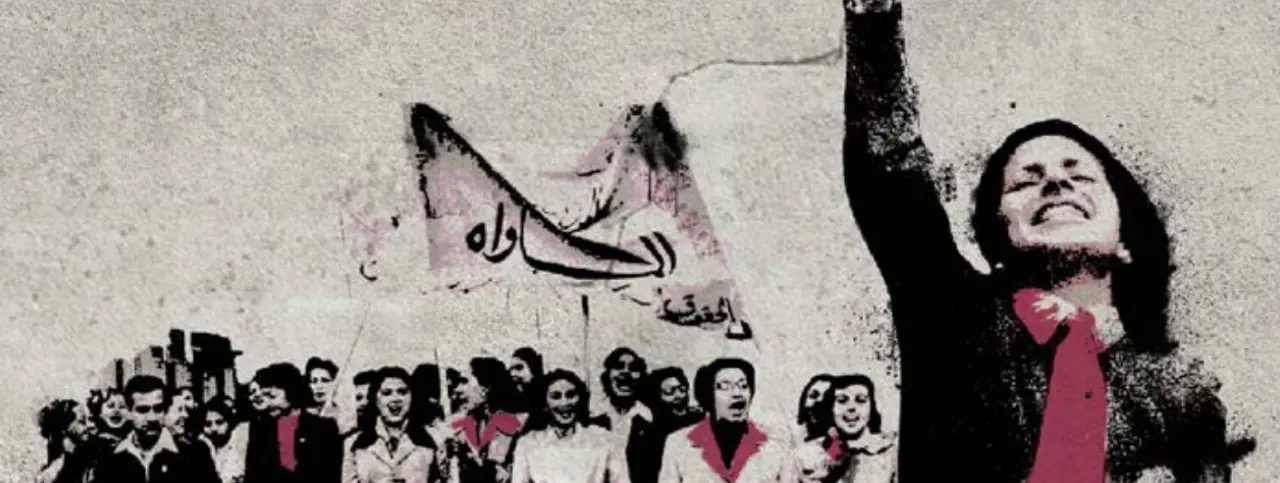
Rahma was involved in political activism through the Women’s Party, which was headed by Ms. Fatma Nemat Rashid. Rahma recounted that the party members had once requested a meeting with Mostafa al-Nahhas Pasha to discuss women’s rights, and that they wrote the banners addressed to him with their blood. She recalled that Amal Fahmi, the media pioneer, was a party member. Rahma also participated in the women’s sit-in at the Journalists Syndicate, with the pioneers Doria Shafiq, Fatma Nemat Rashid, and Siza Nabarawi, as well as a delegation from Huda Shaarawi’s Association. Together, they mobilized the public opinion towards the demands of the sit-in, and invited school principals to support the sit-in, which resulted in the Egyptian women’s attainment of their political rights.
Rahma was nominated by Army Officer Ahmed Anwar to go to the battlefront during the Tripartite Aggression. Although she was accepted, she eventually did not go. During the Naksa defeat in 1967, Rahma visited the hospitals to provide aid to the wounded, and raised donations for them from all her acquaintances. In addition, she was in charge for distributing the aids from the Ministry of Social Affairs among the Bedouins of Sinai. Following the July Revolution, many Egyptians were arrested in Libya, including one of Rahma’s brothers. Rahma went to the Libyan prisons with a delegation of women to discuss ways to release their family members.
Rahma was proud of her unceasing contribution to social service throughout all the major events in Egypt. Her social work career often made her unable to maintain an ordinary social life, due to her limited time, and her constant preoccupation with volunteering and social service.