


Thuraya al-Shafei
School Principal
Thuraya al-Shafei is an Egyptian woman pioneer of education. She attended Helwan Secondary School, before earning her bachelor’s degree from the Faculty of Education in Egypt, then her master’s degree in education from the University of Indiana. Thuraya took part in the student activism against the British occupation in Egypt, and was a founding member of the Young Muslim Women’s Association in al-Minya. She held several posts as a teacher and a teaching supervisor in various Arab countries, including Iraq, Saudi Arabia, and Libya.
Thuraya grew up in a family that valued education, and believed in the importance of girls’ education. She recalled, from her family history, her paternal grandfather’s travels to France seeking education and knowledge. He even helped his sister, Lady Muntaha al-Shafei, to pursue further studies in France, and she was the first Egyptian girl to travel to France to receive education. Upon her return to Egypt, Lady Muntaha became responsible for teaching the Khedive’s children. Thuraya also talked about her maternal grandfather, who was a senior employee at the Ministry of Finance. He enrolled his daughter, Thuraya’s mother, in al-Saniya School to learn reading and writing, and acquire the English language skills. Thuraya’s mother was born in 1882, and at that time, providing girls with the opportunity to receive formal education was not a common practice in society.
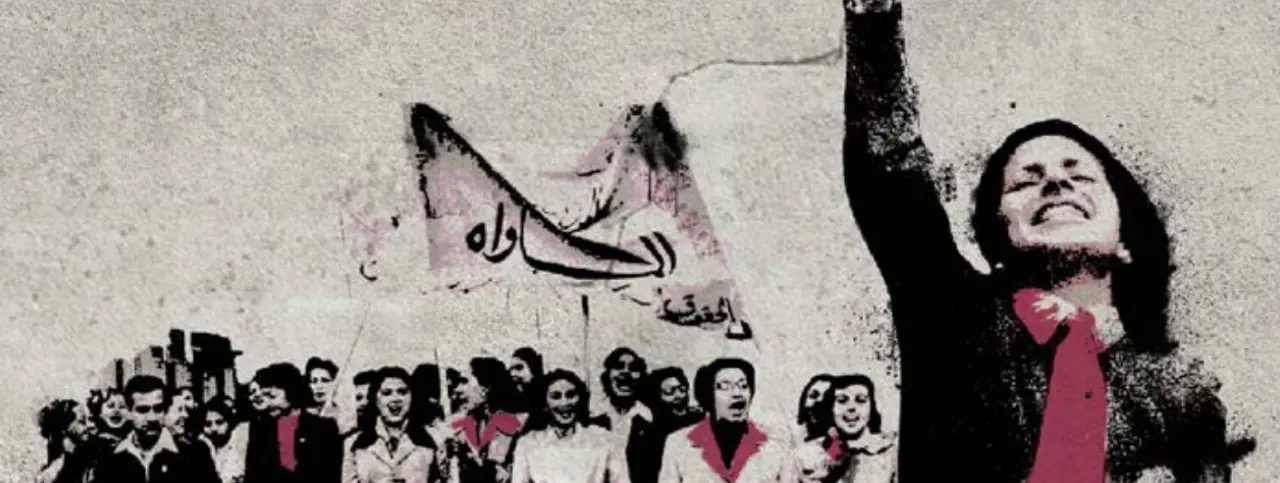
Thuraya attended an Italian school in Heliopolis, where she grew up, but she asked to be transferred to another school because of the discrimination she experienced as an Egyptian, since the school favored foreign students. Thuraya changed schools a lot during her childhood due to her family’s concerns about her receiving a foreign education. She attended La Sainte Famille Christian School in Heliopolis, then the Coptic Girls College in al-Abbasiya, where she remained until her third year of primary school, before enrolling in the boarding division at Abbas School in al-Sabteyah when her family changed their residence. She later moved to a school in Helwan to complete her primary education, then joined the science department at Helwan Secondary School where she earned her high-school diploma in 1933. Thuraya’s desire was to attend the Faculty of Medicine, but her French education posed a challenge, since medical studies were only offered in the English language. As a result, she attended the Institute for Education for three years, with the aim of becoming a teacher. Among her memories of that period was participating in a student strike following the 1936 treaty, during which she came under fire, when the British troops attacked the strike.
Upon her graduation, Thuraya worked as a teacher at al-Mansoura Secondary School, then at al-Mansoura Kindergarten School, with the Principal Ms. Saniya Azmi, who helped her transfer to a school in Cairo, as per Thuraya’s request. Thuraya worked at al-Orman Kindergarten School for four years, before being nominated by Ms. Saniya Azmi to work as a principal at Prince Faisal Kindergarten School in Iraq. Despite her mother’s strong objections, Thuraya traveled in January 1943 with her father’s support. In Iraq, Thuraya established the kindergarten school education, introduced the Egyptian teaching methods, and trained the teachers. She recalled the close and kind relationships she had with her coworkers there.
Upon her return from Iraq, Thuraya worked at Helwan Kindergarten School. In 1949, she was nominated by the ministry to serve as the Girls’ Education Inspector in Libya. However, Thuraya could not last long there because of Italy’s tight grip over Libya, in addition to the tough living conditions there. She returned to Egypt, and continued to work at Helwan Kindergarten School until the 1952 Revolution. Thuraya recalled that after the Revolution, the elementary schools were converted into either kindergarten or primary schools. Ms. Saniya Azmi appointed her to work as a Kindergarten Inspector at the Educational Directorate in Tanta, where Thuraya worked for two years, before becoming the Inspector of the entire Gharbia governorate. Thuraya later served as the principal of al-Mansoura Teachers School for three years. With her interest in rural development, she established a school for rural education in the village of Sandub, in al-Mansoura, and was keen on maintaining a link between this school, the other schools in the neighboring villages, and the Teachers School, where the villagers were invited to school concerts.
Thuraya was nominated to travel to the United States, along with some of her colleagues, as part of the Point Four agreement between the Egyptian Ministry of Education, and the United States. However, due to the Tripartite Aggression on Egypt in 1956, Thuraya did not travel, but later met with the Head of the Educational Directorate to suggest traveling to study at her own expense. In the USA, Thuraya studied for her master’s degree in education at the University of Indiana, and earned the degree in just one year, although it was difficult for her to study in English. She then enrolled in the University of Minnesota to obtain a PhD in rural education, but did not get to finish her studies and earn her PhD due to the Ministry’s refusal to extend her stay abroad. As an alternative, Thuraya decided to obtain a professional specialization degree in education, and was appointed as an assistant to her supervisor.
Upon her return to Egypt, Thuraya served as an Education and Psychology Inspector, then got seconded to the Teachers College in al-Minya, in order to take charge of the planning for the preparatory and secondary educational stages. She worked under the deanship of Ms. Aisha al-Kashif, who nominated Thuraya for the dean’s position when she retired. During her time in al-Minya, Thuraya founded the Young Muslim Women’s Association, since there already was an association for young Muslim men. She delegated the management of the association to the teachers and students, and the range of activities included sports and concerts. Thuraya got married while she was in al-Minya, but a year after her marriage, she asked to be transferred to the Faculty of Education at Ain Shams University to be with her husband in Cairo. Thuraya became the first woman to teach at this faculty. In 1969, she was seconded to travel to Saudi Arabia to work at the Girls’ College, but did not last long, due to the difficulties she faced there.
Thuraya recalled her happiness when the 1952 Revolution erupted, given her intense hatred for the British occupation and the foreign presence in Egypt, since her childhood. She recounted that the Revolution changed the Egyptian society greatly, and attributed this shift to how civilized the Egyptian people are, by virtue of their history. She added that the Egyptian people always had the ability to improve their living conditions by themselves, but they needed a role model to look up to. Thuraya also highlighted that she never felt that being a woman had posed any obstacles to her career, since her courage and prowess did not make her feel like there was anything she could not do. She believed that being different from the mainstream society gave her a sense of distinction. Yet, she witnessed different forms of women’s oppression in society, particularly how some parents insisted that their daughters leave school to get married. She recalled that a large number of her friends did not get to finish high school because of such pressure, and one of them even got married when she was in the fifth grade of primary school.